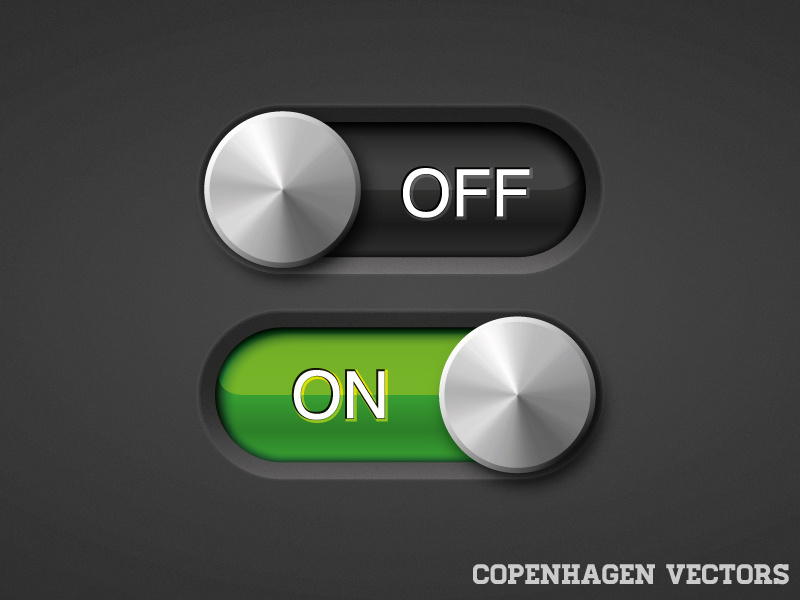
This is kind of embarrassing to admit, but I couldn’t figure out how to change the state of a toggle switch for a really long time. I kept trying to slide the switch left or right. Sometimes it worked, but often it didn’t. It wasn’t until I had been using an iPhone for a couple years that I discovered you’re just supposed to press it, not slide it. What a stupid design.
I happily confirmed that the settings app in GNOME Shell 42 implements sliding correctly, it works fine.. so I tried slide, slide, slide and a little bit more and the gnome-shell process crashed :)
Crashing is funny. In this case, it's hopefully because of the thing it toggled and not the UI. (I was toggling "allow overamplification" in the sound settings).
Maybe this is the relevant line of the crash log: Object Gio.DBusProxy (0x55e4d0f30a90), has been already deallocated
Sure sounds like a race. Building race-free software is hard, disciplined work, and may require blocking proposals for "hot" new features. So the cooler heads tend to lose those skirmishes, on either a FOSS or commercial battleground.
The 1 button instantly starting the microwave for 1 minute annoys me often. I want to set the timer for 15 seconds so I can walk away. For 1 minute, double-tapping the 30s button is sufficient.
The real annoyance, though, is that pressing cancel/off does absolutely nothing if the microwave is being used as a timer (without the microwave itself running). When the timer beeps, my first thought is to press cancel/off. Then press it again a few times, because it's still beeping. Then I remember that there's a dedicated button (somewhere in the middle of the panel, labeled with small text) to cancel the timer.
because endless years are going into a fundamentally subpar system (GTK written in C and JS, because gnome devs were not edgy enough with just C, and they are obviously too cool for TS)
Gnome continues to be created even today with C and JS.
After a few years of Windows, this week I installed Ubuntu again, and it's full of crazy bugs. Though no crashes yet! So at least they improved on that a lot.
Just confirmed, on 16.3 still slides, you can even do it partially/slowly. Readily accessible one is settings airplane mode, first setting in settings.
Absence of verb in label makes it clear what it is.
Meanwhile, on Kindle, it shows a black airplane in a white circle labeled "Off" and a white airplane in a black circle labeled "On". This is a recent update from before where the first was an airplane with a slash through it for Off. In both cases, Cell/WiFi is on when labeled Off, network+radios are on when icon was airplane with a slash through it labeled off.
I have an iPad. There seem to be two kinds of toggle switches in the native apple apps; one of them slides and animates, but the other one can only be pressed and it doesn't animate the transition. The latter is less common, but I've seen both in the same app before (settings I think).
It's likely a strange bug, but I think it's relevant since you can't _always_ slide it.
I’ve always liked Apple’s implementation because the slider has a temporal state.
Airplane mode used to take a a couple seconds to enable so the toggle felt “stickier” to toggle. When you tapped on the toggle, the round button elongated and stayed in the middle for a split second before hitting the right side boundary of the toggle.
That seems to no longer be the case. Toggling Bluetooth on iOS 16.2 on an iPhone 14 Pro replaces the slider with a spinner, and it even flickers when turned back on.
Also, the sliding only works correctly if you press and hold and then start sliding. If you swipe, it toggles regardless of which direction you swipe.
This started when people discovered they could style <input type=checkbox> to look like a switch with pure CSS. (And, as a component library author, I can confirm it continues because we, perhaps lazily, don’t bother implementing the slide.)
Years ago I built a cms using these sliders, and one of the users was having problems. I double checked and it worked fine. So I said I'd watch him use it to see what was wrong. He clicked the slider and dragged it to the other side. My jQuery code was listening for 'click' events, which was the source of the bug. Since then I'm careful to use them "properly".
The problem is that a lot of websites have started using them and only implement the click/tap event, not the mouse press and move event, or the slide event. So they end up being quite misleading.
The problem is the popular toggle switch should be like a extension socket switch, not the slide body color as status. The head of each end should be lighted up, not the body.