This was a pleasant surprise to find my own site on HN this morning! I wondered why it was getting a few more FB likes than usual today.
I'm happy to answer any questions.
I finished this redesign last week so any feedback is welcome.
The main task was to recreate labels and annotations on the illustrations in SVG format, and to reformat the articles in a way that flows nicely and is responsive, but without needing complex markup in the articles. I'll write about the process if there's interest.
I've previously written a little about this project:
Hey, I think this site is amazing and certain appeals to my "hacker aesthetic" even though I'm not a car person! One thing that I'd like to see is some kind of guided tour - I got to the page and instantly saw "how heating systems work" and then "the engine - how power is created" and this confused me a bit. It made it seem like the first thing you need to know about cars is how the heater works!
Then I realized there wasn't rhyme or reason about the order of the Basics and I kind of got a bit of the tyranny of choice and then came back to the Hacker News article.
I feel if there was a path for first time visitors I would have taken it and been lost in engine parts for the rest of the day ;)
You're right - the order to Basics is somewhat chaotic - I'm going to fix this today. I'd reordered it to push heavily trafficked articles to the front page for SEO reasons. That was a bad idea with hindsight.
I don't think that was a terrible choice. Just that maybe if you're going to do that, that there should also be a "Start Here if you have no idea what's going on" option that would be an ordered walkthrough of the basics.
The site is amazing! For someone only vaguely familiar with the mechanical-side of cars, it was a pleasant surprise to see all this quality content consolidated outside of a textbook.
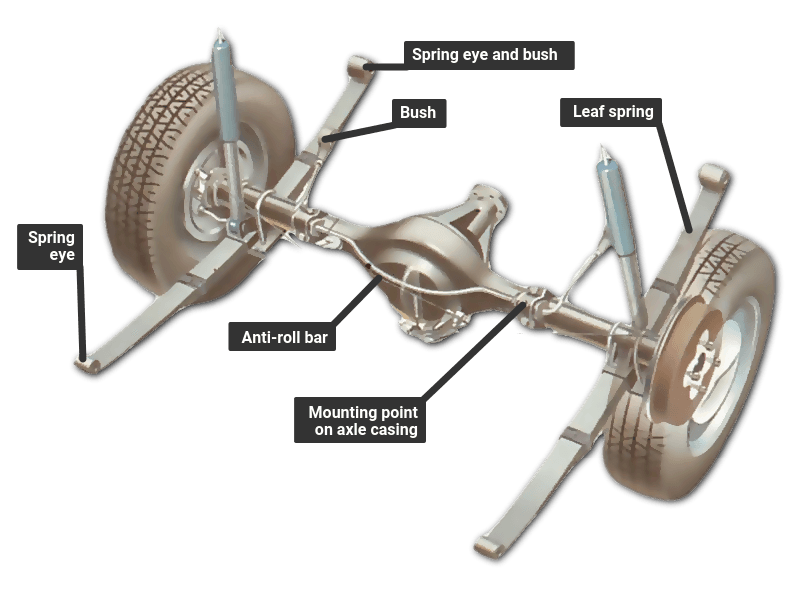
I was reading the sections on suspension systems and the diagrams look just plain beautiful!
Dated or not, it is definitely a great place to get some fundamentals straight. So I took the liberty of posting it on HN this morning.
Thanks! I'm curious - did you just find the site on Google? Over the past two months I've re-mastered the old illustrations with a few filters and the difference is incredible. There's still a little more to do but I'm pleased you find it useful. The next step is to update the iOS app with new versions of the pics.
1) The site still talks about carburetors and has no mention about fuel injection systems, while in Europe all cars sold must have a fuel injection system for quite some time now, so this looks quite outdated
2) Diesel engines of course don't have spark plugs, but you don't mention diesel engines.
Hey I'm all for old school. Building a 1:10 scale radio-controlled replica of a Ford Bronco, and the pages on fixing window winders gave me a great example of how I can make it work for my model.
Suggestion: It would be nice to have some sort of search box at the top that would instantly filter the list of articles as you type. Instead of having to dig through the "more articles" links to find what you are looking for, you could just type "oil", "air filter", or other terms and see the corresponding articles immediately.
Also, sometimes the ads cover page content and when this happens sometimes you can't close them. I'm using Chrome on a Mac.
Suggest a reverse idea. Content that is on the web and then you make a deal with the site owner to create a printed copy of the material which can be postal mailed to someone. Why? Because many times I don't want to click around on links I want a "manual" that I can refer to or read like a traditional book and make notes etc. (Without forking all over the place).
Although yes "connected to the drive shaft" in a sense is how it works but there can be some great discussions of 3 phase motor design, torque demand motor control systems, power electronics, regenerative breaking... The list goes on and on
I've heard stories of almost-new Priuses being sold for a pittance or given away because the battery went - batteries are expensive to replace, but they're not quite as scary as some people think. They can be replaced with generics for $2000 and installed at home, and an article about how to do that would be an awesome idea.
Just a heads up. While it may have changed Google is pretty strict on publishing Adsense income with traffic figures. I'd just read up to make sure so you don't run into troubles.
There are still hardly any backlinks to the site and I don't really know how to boost this efficiently. I was thinking about licensing the content under Creative Commons as I've noticed a couple of sites just copy and pasting my articles in without even a link back."
Did you try contacting the sites and ask them to provide a backlink? Seems like a very reasonable request that most would comply with.
Yeah, I emailed a couple but heard nothing. It's not something that I've spent much time on to be honest. I know when people email looking for links I just delete their emails, so I'd expect the same treatment myself.
As for responsive design, my laptop screen & browser width is 1440px, which makes the font size 24px. This is way too big and is uncomfortable to read. I would say 20px should be absolute maximum because it's so much bigger already than any other text on screen. Line width is also too wide imho, could be 800px easily.
It's not something I've thought about. No-one's ever asked before. I'd certainly take submissions of service / workshop manuals but this area of the site is still very much in progress.
I would love to buy the book, but I see it's available for iOS devices only. Any chance you could make it available on other devices (e.g., Kindle, or just PDF)?
You'll find a graph of growth at the page above from 2013. It basically continued with linear growth at exactly the same rate from the day i launched it.
I always feel so uncomfortable about my car considering how old it is, and I know nothing about it or how it works. Everyone around me just cracks open their hoods and fixes their car, swaps tires, etc. I can't just move stuff around without actually understanding what anything is. I honestly have been wanting to learn more about cars. It also helps keep up with mechanics when they tell me things I don't fully understand, I don't imagine they want to sit around all day answering my questions, they probably have other people to work for. I only vaguely understand the things that have gone wrong with my car and the symptoms.
Thanks for such a beautiful website, and for everyone else sharing some interesting links. Being computer savvy is not entirely helpful when it comes to the mysteries of cars (not entirely anyway).
Btw I would love for there to be an Android app if possible. :)
The single best thing you can do is buy the Bentley Repair Manual (http://www.bentleypublishers.com/) for your car. They're expensive, but will show you how to take your model apart and put it back together again. If you want to learn how a car works, the best thing you can do is take one apart and then try to get it running again.
When you're working on a car, dead tree repair guides + a beater laptop are your best friends.
Haynes (http://www.haynes.com/print) is also a great resource.. might not be quite as in depth as the Bentley guide, but they're a lot cheaper and more than enough info for a novice.
With general knowledge of how an internal combustion engine works I basically learned how an actual car really works by reading through one back in the 90's.
The Haynes manuals are merely worth a quick reference book if you really need to know something model-specific and you don't have access to the maker's original service manual, but not much more.
I recommend the TV show Wheeler Dealers (always skip the first 15 minutes). It's the only car show I've found that actually goes into detail on how to fix things on used cars. You'll learn about common problems and why they happen and when you and shouldn't fix it yourself. .
The Road and Track Illustrated Automotive Dictionary is also a good resource. Unlike the Bently guides, it will not be specific to your car. But it does have excellent illustrations and concise explanations.
They've had an "app" since the early 90s. It's called a "Factory Service Manual" or "Alldata"
There's no way an inexpensive phone app could be made comprehensive enough to be a nothing-to-something tutorial, let alone on the fly. Something along the lines of "Siri, how do I fix <problem>," would set people for getting in way over their head.
Haynes has an iPad app. I work on enough cars that aren't mine that (if I had an iPad) I'd consider it (but usually I can find a paper manual for under $10 used).
In the same way that software is built on thousands of layers of abstraction there's thousands of small steps between only knowing how to drive and designing your own parts for an engine build. 90% of it can also be learned for free on the Internet, just like coding.
Pretty much any service or repair is a collection of small simple tasks. Think about the competency level of some of the people that work on cars...doesn't seem so hard to do now does it?
Get a Haynes manual for your car and read it cover to cover. Even if you don't do your own work, being familiar with the systems in your car will help prevent shops from taking advantage of you.
Working on cars can be like meth. Once you start you're hooked. It often goes something vaguely like this:
If you can add gas you can add windshield wash...
Checking your tire pressure isn't a big step from there...
Changing your oil is easy to do...
Changing a belt isn't really and harder than changing oil..
Changing spark plug wires takes literally no tools...
You do more minor preventative maintenance and replacement of wear parts, become more competent and acquire a few more tools.
Eventually it starts being practically impossible to justify paying $60-$120 for shop labor and 200%-%400 parts cost when I know how easy and cheap some stuff is...
"Doing a brake job myself will me cost 1/4 or less of what it would cost to have shop do it and comes with the piece of mind that I didn't cut corners..."
"How can I justify paying someone to install a new bumper cover when it just needs to be snapped on and screwed down...and the shop that replaced the one on your parents car couldn't be bothered to use the screws..."
"Rear wheel bearings cost under $20 for the set, a torque wrench costs $10 and I don't even need to remove the tire to change the bearings. Hell yeah! This is refreshingly easy..."(90s Tercel, if anyone was wondering)
Fast forward a three years and one swapped engine:
A sensor fails in a particularly odd way, you diagnose it correctly because you know how the system it's a part of in great detail, that's the value of experience...
You're stranded by a minor problem while riding in someone else's car on a Saturday you convince them to have it towed to a shop or Autozone. You've never done that particular repair on that particular model but Autozone's website says it's in stock at that location and they're open until 10...$40 and 1hr later you're on your way to Walmart to buy a clean shirt...
You get a call from your dad "Hey, I just got out of my dentist appointment. Remember that joint on the exhaust that you said was pretty bad?" and reply "Is there still <repair stuff> in the trunk to the front left of spare tire or do I need to bring it?"
IMO, just start learning about and working on your car. If you want to know something Google it.
Oddly enough me and my dad were swapping out the spark plug wires on my car. Some were moderately easy, others were a bit more complicated, but three of them go underneath some part that we really were not prepared to take out just to replace the wires. They're still there sadly. But yeah I know I have a relative who started out like that, and another friend as well.
Edit:
By the way, thanks for the tip about buying Hayne's Repair manual, they don't do manuals for my car (Ford Explorer '99 - nevermind I think I found one) but I never thought about buying a repair manual to begin with, it would probably get me going in the right direction, and give me a lot more relevant information.
As for the mobile app, I mentioned it because they had an iOS app already.
Nice. It must have taken guts to build a car in Belfast during the height of the troubles. Not that it worked out that well in the end, but it is an iconic car.
This is great. As for the criticism that a lot of the content is old, most of the core concepts can be explained better with older tech as it's simpler. This allows you to focus on what is happening and leave the extra details about what technology a part or process has for a case by case basis. https://www.youtube.com/watch?v=yYAw79386WI is a great example of this.
Saying that, an article on direct injection, common rail diesels, efficient turbo charging, variable valve timing, MAF VS MAP EFI would be worth considering.
I used to love carburetors. Now there was technology you could understand: little needles and valves and levers and jets and gaskets, and if anything went wrong, you could just get a rebuild kit, tear the carb down down, clean it out, and put it back together with the new parts.
In fact, rebuilding the carburetor on a friend's VW Beetle gave me the confidence I needed to take the next logical step: rebuilding her whole engine!
I didn't have all the right tools, so we took the VW down to the Briarpatch Cooperative Auto Shop on Park Blvd. in Palo Alto. [1] [2]
This was like a TechShop for cars: You could get a membership and take your car there to work on it using their tools or your own. Or you could have one of their mechanics help you with the work.
I got the engine torn down, all the parts laid out on the floor, and started to think about how to clean it up and put it back together.
Then I realized I was in way over my head and called the resident mechanic over to see if he could finish it for me.
He did, but only after shaking his head sadly and saying, "This is the worst way to get a job."
Modern cars are very locked-in with computer systems. So fixing many aspects of modern cars is no longer possible for most car owners like it used to be.
This seems like a neat site for people with older cars. Although, if you are owning a vintage car, then surely one should know a bit about maintaining that car without having to resort to such a site, but personally, it's nice to know it is there.
I mean, its articles on break systems, suspension and steering are useless to me, because I own old Citroëns, but it's nice to know there is a site to go to if I am curious, because I definitely intend to own more older cars (they tend to be more interesting than modern cars).
Modern cars are very locked-in with computer systems. So fixing many aspects of modern cars is no longer possible for most car owners like it used to be.
So true. And so frustrating. I grew up in a household where my dad built and raced stock cars, and was always building hot rods for street racing (sssshhhh, don't tell) and so I grew up working on cars, and for a big chunk of my life I did my own repair work. But as you say, newer cars are so much more challenging. It's not just the computerized bits either, it's the tighter clearances / less space in the engine compartment, the way you often have to disassemble half the car to even get access to the think you need to touch, the specialized tools you need for some jobs, etc.
Coincidentally my truck (a 2000 Ford Expedition) died Wed. morning. I am thinking about just going on Craigslist, finding an old 1974 Chevy C10 pickup, or something of that ilk, and buying that. I can do everything on a truck like that myself, all the way down to pulling and rebuilding the engine if need be.
because I definitely intend to own more older cars (they tend to be more interesting than modern cars).
They certainly can be, in their own way. I mean, I like both, but old cars definitely have a certain special appeal to them.
I'm not sure how true this is anymore. An OBD scanner makes the computer work for you. Modifications are certainly more difficult, but repair is easier IMHO. It is vastly easier to go replace the one bad fuel injector on a 2005 than rebuild a carb on a 1983.
Of course it's easier to replace than rebuild. I doubt I would be keen on rebuilding a fuel injector, even an old one. But replacing a carburettor on a 1983 is trivial.
"Old tech" often just works. Flawlessly. I have a dumper truck I borrow from next door. Crank handle, diesel. It just works. Starts every time. No battery, no crap to go wrong.
"new tech" is often designed to last 5 or 10 years maximum. After that is anyones guess as to whether it'll work.
Incidentally, mechanical diesels are also immune to EMP. All they need is fuel and air. Not true of newer electronically controlled ones, which is done mainly to reduce emissions.
You've a bit of survivor bias. Old tech that is still running is likely to last a while more. But all of the old tech that was designed with planned obsolescence in mind doesn't work any more, so you don't think of it. That is, "old tech" was once "new tech." There's also the old tech that wasn't designed to last long, like adobe mud walls.
Some old tech doesn't work flawlessly. Steam power vehicles, like locomotives, cars, and tractors, require more maintenance than their new tech replacements.
Look at sewing machines though. They used to be made of cast iron and wood. They were built properly, and it shows. They still work 50 or 60 years later.
Modern day sewing machines are made of cheap plastic and flimsy metal. They last 5 years.
Yeah there's some survivor bias, but the materials used to make things in the olden days was just better material. On the down side, sewing machines used to cost a months wages or something.
Some materials in "the olden days" were indeed better. We don't have the old growth timber to make cheap, high-quality wood like we did.
But not all materials are better. Celluloid is the first thermoplastic, and the first material used for movie films, but it's highly flammable and has been replaced by acetate film. Celluloid was also used to replace ivory in billiard balls, which was better than the clay and wood balls used earlier. All of those materials are worse for professional play than modern billiard balls made from composite plastics.
You brought up sewing machine. Sewing machines were made in the hundreds of millions. What you see are the ones that weren't trash and were maintained. Here's a page complaining about people complaining about people selling old sewing machines that mostly useful as "boat anchors" http://runningstitches-mkb.blogspot.se/2012/08/open-letter-t... . Quoting one example, "I'm not impressed when you tell me your 1950 Singer has "only been used twice to sew on patches" (note: I am not making this up!) If this machine has been sitting unused in an attic for half a century, it is most likely frozen or seized up."
Quite clearly a lot of old sewing machines do not "still work 50 or 60 years later."
A Singer 201, which is widely considered the classic sewing machine, cost 6 months wages, not the 1 month you think it was. See http://www.sewalot.com/singer_201k_sewalot.htm . (Also, Singer switched from cast iron to aluminum a bit over 60 years ago, so your timeline is a bit off.) There are a lot of crappy modern sewing machines in the <1 week's salary range. But that's hardly a fair comparison, is it? Plus, how many of those have an original motor that's been in use for 60+ years without wearing out?
My Mom has a cast iron Singer 201. Which she loves even though it only does straight stitches. She also has several other sewing machines. She still uses her Bernina from the 1980s. So at least some modern (less that 50 years old) machines can and do last longer than 5 years.
Finally, there are plenty of sewing machines on eBay from the 1950s and early, for cheap. What is the reason that they aren't scooped up if they are of significantly higher quality than modern machines?
Speaking of old diesel tech that just works and will be here forever, if you're in the U.S., it's still possible to pick up an M35A2 on the cheap (like ~$2000 cheap), and they'll run just about any fuel (multi-fuel Hercules diesel FTW), and are almost indestructible by normal means. They are also far less temperamental than many older trucks. You just need anchor arms to steer it and the ability to drive stick shift.
To add to your last statement, it seems like cars are engineered for the length of a typical lease. Afterwards, nondeterministic electric gremlins start showing themselves.
Even if all carburetors disappear from the face of the earth, it's still good to know they once existed, what purpose they served, and when and how they started being replaced.
Extreme example: I once read a fascinating article about middle aged technology, where they commented on, among many things, how a high-quality cart wheel would have a hard, dense wood on the axis, another kind of wood in the spokes that was flexible, and a border made of a very stiff wood. I'm searching for it but I don't seem to be able to find it, alas.
The last carburetors in the US were in 1994 ISUZU trucks. [1] Some motorcycles still use them for simplicity and the last NASCAR season with carburetors was 2011.
And anyway, why are we still teaching people how a CPU without branch prediction works? When will we let go of old technologies?
> And anyway, why are we still teaching people how a CPU without branch prediction works? When will we let go of old technologies?
Fuel injection systems have replaced carburators. Branch predictors haven't replaced anything, if you want to compare them with any engine that would be turbo chargers (i.e. they're optional).
I'm not sure comparing CPUs with engines makes a lot of sense though.
You can find them in the inboard motors on many not-so-old boats. My 10 year old Mercruiser uses one (although I think the newer Mercruisers have all shifted to EFI). I found the site to be very instructive. I'm always interested in learning more about how the engine in my boat works in case there's anything I can repair at home instead of taking it to the shop. I think a lot of the information on the site is transferable seeing as how mine is essentially a GM produced 'car-engine' mounted in a hull (minus a transmission and some other things).
Just search ACM for branch prediction papers at ASPLOS or similar conferences and look for corporate affiliation. IBM, Intel, and others routinely publish this stuff. It's usually patented first, so you can also check the USPTO.
Good for you! I will never understand the mostly American tradition of buying a new car every few years? Cars that are so complicated; the owner is forced to bring it to the shop for every hiccup. A lot of cars/and trucks from the late 80's to around 2008, are pretty easy to work on, and with the proper maintence can last 300,000 miles. And if your not afraid of getting your hands dirty--you will never have to pay a mechanic $120/hr to work on your vechicle. These newer vehicles are so complicated--a lot of shops do a lot of learning on your dime. (I have a Toyota with a 22R engine. It has one 350,000 miles and it's never seen a mechanic--except for smog checks, and never failed once. Actually it did fail once, but it was due to an error in a Motor Emmission publication. If you have an older car, and need a
Smog check; make sure your smog shop has access to Mitchell manuals online(OnDemand5). They are highly accurate!
My dad gave me some good advice years ago. He told me to buy a year specific service manual for every automobile you ever buy.
would be interesting to see vehicle age by geography. I suspect all the rural farmers are the ones skewing the average (it's not unusual to have a 20-30yr old truck out on the farm.. You can fix them with the same tools as your tractors).
It's due to the perceived wisdom that every car suddenly becomes a lemon after hitting 100k miles. The "low social status" attributed to driving an older car is also at play.
Here in Europe, it's not uncommon to see cars in good shape which have over 400k miles on the clock. If you think about it, a European or Japanese mid 90's car with no rust and a rebuilt engine will give you more trouble-free miles, for a fraction of the money.
For all those who have not liked my post: I rebuilt my first carb about 40 years ago, sitting on my fathers lap (age 5). He was a mechanic, I was a mechanic until I was 20. After that I spent the next 10 years selling tools and diagnostic equipment, as well as fixing a lot of cars - especially problem cars.
I have worked on thousands of carburetors. I can re-jet the 2 carbs in my race bike in about 5 minutes (main jets only). Carburetors are indeed in use on millions of engines. I understand Bernoulli's principle, and I also understand that a carburetor is lousy at part throttle metering. What does that mean to you?
Part throttle is anything that is not full throttle. Some people have a hard time believing that a fuel injected engine offers no full throttle advantage in total horsepower - it is the barely open part that matters. Fuel injection is massively more efficient and clean than carbs at part throttle. The part throttle issues cause all the emissions problems, cause all the pollution, cause all the smell when following behind a carb'd car.
The electronic carbs of the 80's were a real nightmare. Take a mechanical device, put some dozen vacuum lines on it, each controlled by a solenoid, give it a dumb computer that you can't talk to, and no tech information anywhere. Not even at the dealer. Caveman tech, dressed up with bunch of patches and cruft. It was done to save a buck, not because the better way wasn't known. And the systems are horrible and should be sent to the crusher. It is fuel metering in the worst way; adding miles and wear just makes all the problems even worse,
The EEC-IV systems used by Ford from 87-95 only had a 60 pin connector on them, the same number of pins that a Beagle Bone Black has. I have be thinking about how to use that as a basis to replace existing systems with an open source system that would be better and cheaper.
But carburetors need to die. They are not great new, and get worse with age.
Yeah, it's getting dated now and I'm planning on creating some new content shortly. That said, it's still highly relevant for most classic car owners, and large amounts of the developing world.
The old content is awesome and is never going to stop being relevant. I think the key to address the criticisms would be
1) Navigation - perhaps some sort of timeline that accompanies each article so that you can easily see the context that technology is in (e.g. direct injection <- fuel injection <- carburetor).
2) Edit the copy to ensure that old technology isn't identified as new. A quick glance turned up examples like: "Some high-performance engines do not have carburettors...".
It will be even more dated when electric vehicles take over and internal combustion engines become as niche as steam engines. But then they still make manuals for those: http://www.haynes.co.uk/thomas/
Great site! I'm going to add it to my car fixing workflow. Ie, thing breaks -> read relevant article so I understand how the system works -> find a good tutorial -> source parts -> fix.
If you are looking for article suggestions:
- Article about different fluids and their properties. I'm betting that you've covered oil weights already, but how about coolants? Regular coolant has a lower freezing temp than water, but does it have a higher boiling point as well? Exactly how poisonous is it and what things will it damage when spilled? Same for trans fluid.
- Possibly out of scope, but an article about how to source parts for older cars. This has always been a tough problem for me! I go with something like: look up parts schematic from manufacturer's website -> search for part by part number -> try to find the cheapest generic part (though sometimes it's worth it to pay for quality) -> find that generic parts don't exist -> go on a merry hunt for used parts on ebay and at scrapyards.
A few pieces of feedback. In the suspension section, it would be worth explaining a few things about truck suspension, also. Like solid axle, front and rear suspension, both with Coil and Leaf springs. Also, dampers are incredibly important in large trucks/SUVs because if they fail, body roll has much higher likelihood of causing you to lose control. Finally, a "bounce test" really won't work with many SUVs or truck where there is simply no way to compress the suspension to any meaningful degree with your hands.
personally, with trucks, I like the "speed bump test" where you drive into a speed bump and if the truck/SUV continues to oscillate upon returning to the correct height, your dampers probably need work. Additionally, since most trucks/SUVs use similar oil volume dampers to cars, the life of their dampers is frequently lower than in cars. The ones in my TRD Tundra lasted about 40K miles.
Propane or MAPP gas torch. Heat what the bolt goes through until it's cherry, then wail on it with an impact wrench. The torch is often referred to as "the big red wrench". Also, don't underestimate the power of soaking the stuck bolt in penetrating oil.
Even better than any penetrating oil you can buy: ATF + Acetone[1]. Also, having a rosebud torch with Oxygen + Acetylene is a must if you find yourself dealing with rusty bolts often.
After reading this I feel none the wiser. Whereas after watching this ancient Chevrolet training video from the 1930's I feel like I completely understand how diffs work:
Very nice illustrations, but you are missing important systems that are found on many/all cars from the past 20 years, like front wheel drive, CV joints, closed-loop emissions control, OBD-II and CAN bus, distributorless (electonic) ignition, electric power steering, CVTs and dual-clutch automatic transmissions, and TPMS.
Diagnosing a check engine light by reading OBD-II codes, for example, is something that every owner of a car produced after 1996 will eventually need to deal with.
You should rebuild your content around systems that are found on the majority of cars on the road today.
I was disappointed to see that there is no guide on replacing brake pads for disc brakes. It seems like everyone in the world knows how to do this but me.



This was a pleasant surprise to find my own site on HN this morning! I wondered why it was getting a few more FB likes than usual today.
I'm happy to answer any questions.
I finished this redesign last week so any feedback is welcome.
The main task was to recreate labels and annotations on the illustrations in SVG format, and to reformat the articles in a way that flows nicely and is responsive, but without needing complex markup in the articles. I'll write about the process if there's interest.
I've previously written a little about this project:
http://www.howacarworks.com/about/making
http://www.howacarworks.com/a-year-on
Current traffic is 200k uniques a month and it's taken about two years of steady growth to reach that point.